Disciplines
The Horse at Work
What changes a horse painting is not the breed, it is the work. The animal under a general is a pedestal; the animal in a cavalry charge is a weapon; the animal at the post is a wager; the animal in the shafts is a livelihood. Each use brings its own composition, its own viewpoint, and often its own buyer. This index sorts the collection by that job rather than by artist or period, because it is the job that explains why the picture looks the way it does.
Disciplines · 1 of 5
The Equestrian Portrait
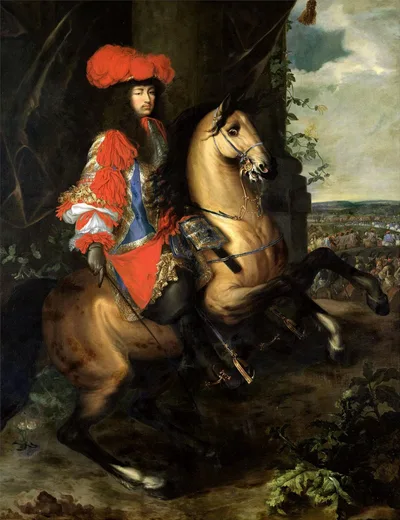
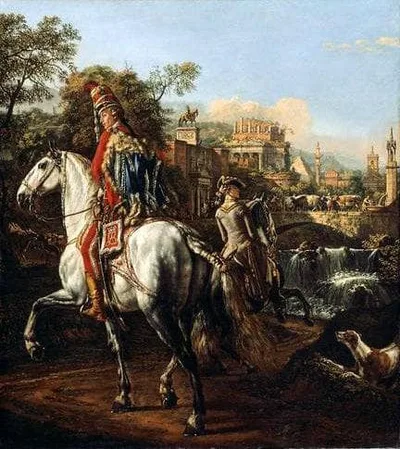
The oldest use of the horse in painting: a man raised above eye level, the animal borrowing him its authority.
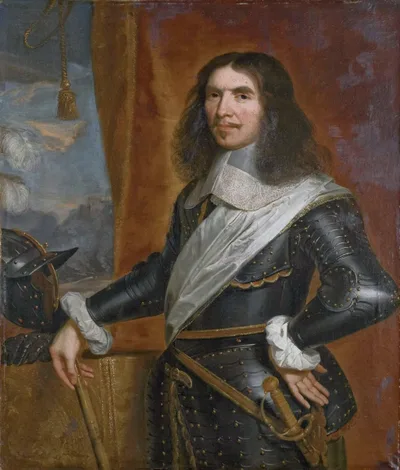
The oldest use of the horse in painting is to raise a man. The rider is the subject, the animal is the plinth, and the composition descends from the bronze of Marcus Aurelius by way of Titian and Velazquez. The horse's raised foreleg, the turned head, the low viewpoint that puts the sitter against the sky — all of it is borrowed machinery, repeated for four centuries because it works.
Disciplines · 2 of 5
Under Arms
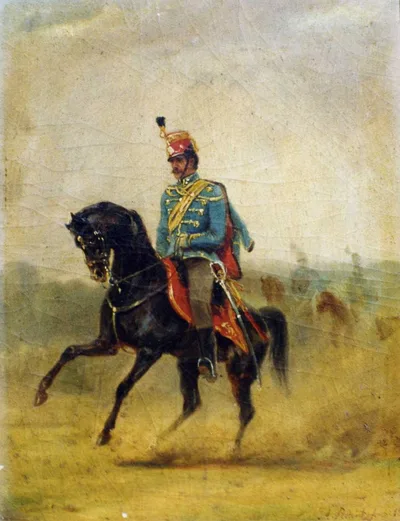
Cavalry charges, hussars and cuirassiers — the horse as the fastest thing on a battlefield for three hundred years.
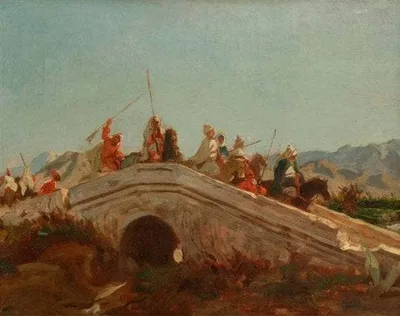
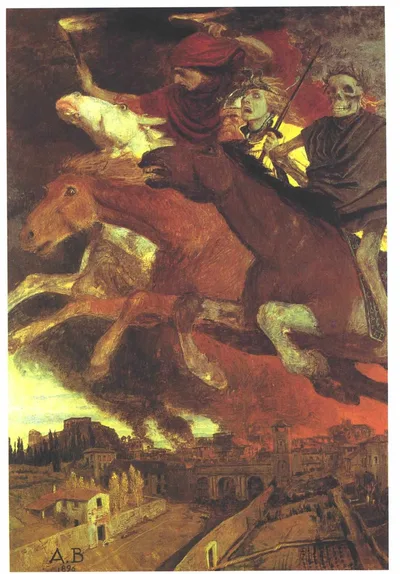
For three hundred years the horse was the fastest thing on a battlefield, and battle painting is largely the problem of painting speed. Cavalry charges, hussars, lancers and cuirassiers gave artists a subject that was chaotic by nature and had to be composed anyway; the conventions that resulted — the diagonal wedge, the fallen horse in the foreground, the smoke that hides the far end of the line — outlived the tactics they described.
Disciplines · 3 of 5
The Gallop
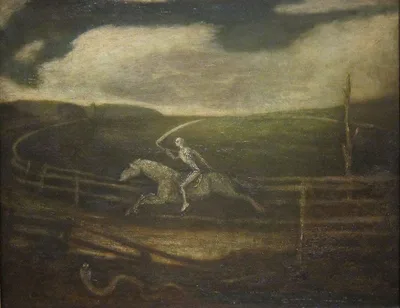
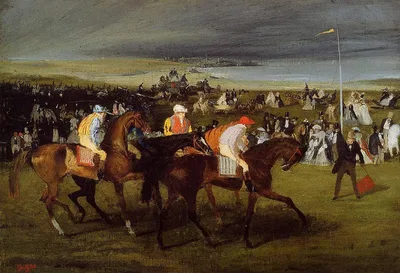
Racecourse and hunting field: the genre that paid British animal painters, and where the horse is the wager.
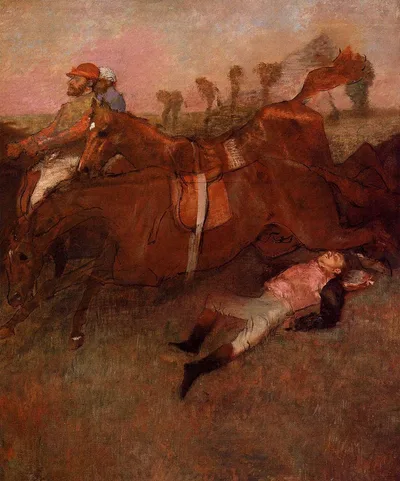
Racing produced a market before it produced a genre. Owners wanted their winner recorded, which is why so many of these pictures are portraits of a named animal standing in profile with a groom, and why the artist was often paid per horse. The flying gallop — all four legs stretched — was painted for a century before photography proved no horse ever moves that way, and the pictures made after that proof look different.
Disciplines · 4 of 5
In Harness
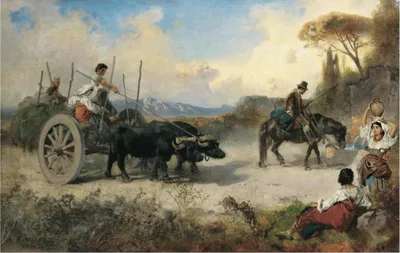
Plough, cart, timber and coach — the working horse, usually painted as part of the ground it turns.
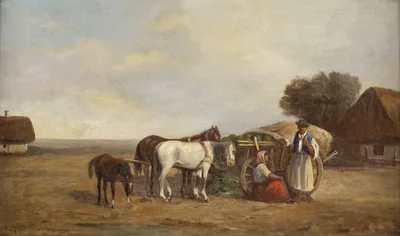
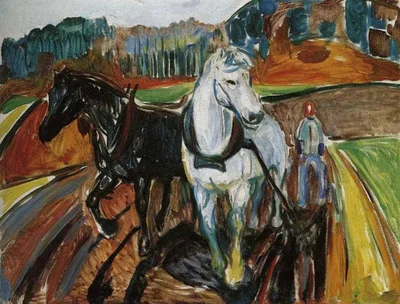
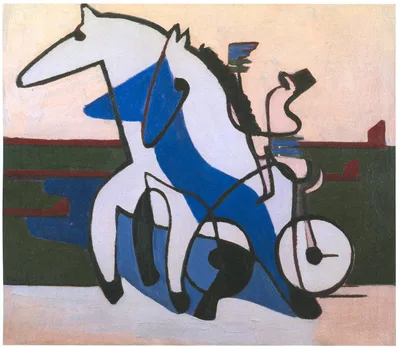
Cart, plough, barge, timber and coach: the horse at work is the horse most people actually saw. These pictures belong to landscape and genre painting rather than to sporting art, and the animal in them is usually heavy, usually seen from the side, and usually doing something slow. They are also the most reliable record in the collection of what rural work looked like before the engine.
Disciplines · 5 of 5
Stable and Study
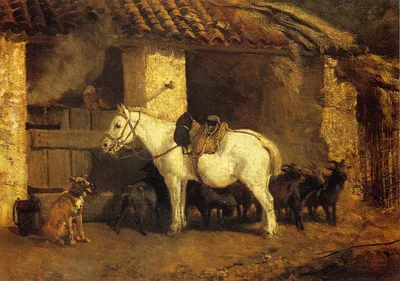
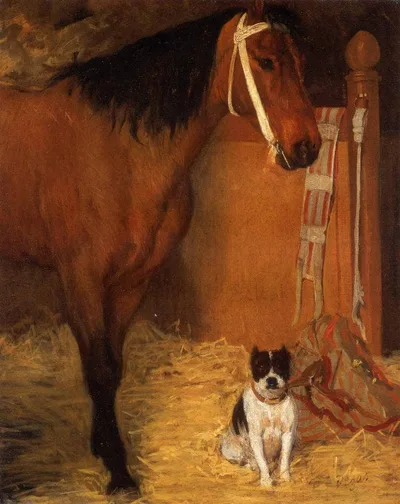
Mares, foals, stallions and grooms at the water trough: the horse observed at rest, with no rider to share the frame.
The stable, the study and the anatomical drawing are where the horse stops being a symbol. Stubbs dissected one over eighteen months to make his engravings; Degas modelled them in wax to understand the gait. What survives from this part of the tradition is quieter than the battle pieces and far more useful — it is artists learning the animal rather than deploying it.