
How Painters Represent Horse Movement
Published · Art & See editorial desk
A lifted leg, a rearing body or a busy racecourse can suggest movement, but a painting is not a sequence of measured steps. To understand a pose, begin with the purpose of the image and the evidence attached to that individual work.
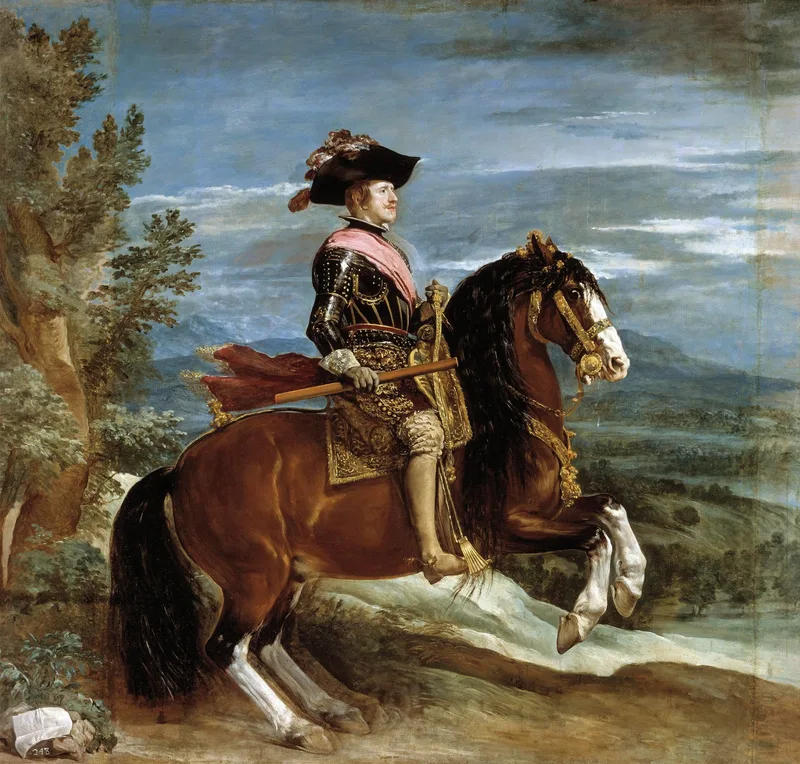
Movement can express command
The Prado dates Velázquez’s Philip IV on Horseback to about 1635 and records it as P001178. Its interpretation emphasises the king’s composed authority and control of his mount. The picture uses an equestrian format to present power; the institution contrasts this calm effect with more forceful representations of command. [1]
This is a different question from how fast the animal is travelling. When comparing a royal portrait with a sporting picture, describe what movement does within the composition before assigning a specific gait. A pose can help establish the sitter’s public image without acting as a scientific diagram.
A racing subject can reuse another kind of pose
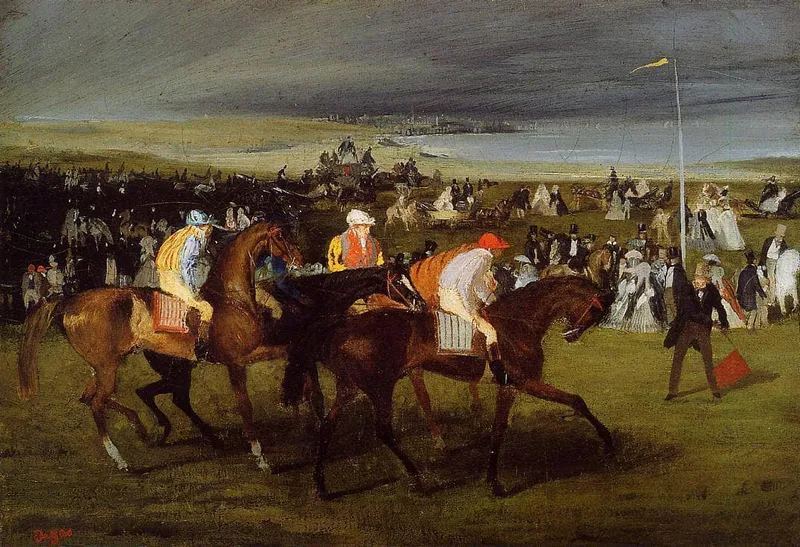
In its account of Degas’s At the Races: The Start, Harvard Art Museums compares the leftmost horse’s lifted leg with dressage and connects the early representation of horses to existing artistic models. It also discusses changes in Degas’s treatment of motion in relation to Muybridge’s published photographs. [2]
That evidence supports a comparison of visual sources. It does not mean that every later horse by Degas was copied from a photograph. To make that stronger claim, one would need a documented relationship between the individual artwork and a particular photographic plate.
What sequential photography adds
The Library of Congress holds an Animal Locomotion plate by Eadweard Muybridge, dated around 1887, showing consecutive views of a ridden horse in motion. Its catalogue identifies plate 593 and describes views in profile and towards the viewer. Unlike a single painted pose, the plate supplies a sequence that can be compared image by image. [3]
This difference in evidence is the important point. A sequence can show changes between successive positions; one painting cannot by itself establish the timing between them. Neither format removes the need to ask how the image was made and what it was intended to demonstrate.


A vocabulary that stays close to the evidence
Begin with visible relationships: the direction the horse faces, which legs are raised, the rider’s position and the arrangement of nearby animals. Use a technical term for a gait only when the source identifies it or the analysis can support it. Do not infer a breed, injury or training condition from a painted silhouette.
Compare the royal portrait, race scene and photographic study as different uses of the equine body. Their value does not depend on arranging them into a simple story in which photography finally “corrected” painting. They answer different questions about representation, authority and movement.
| Work | Date in the record | Legs as they appear in the image | What the institution's entry states |
|---|---|---|---|
| Velázquez, Philip IV on Horseback | about 1635 | Both forelegs raised and bent, the weight carried on the hind legs | The Prado emphasises the king's composed authority and control of his mount, and contrasts this calm effect with more forceful representations of command [1] |
| Degas, At the Races: The Start | about 1860–about 1862 | The horse at the left lifts one foreleg, bent high at the knee; the other three keep at least one hoof on the ground | Harvard identifies four jockeys nearing the beginning of a race, compares that lifted leg with a dressage exercise, and discusses Degas's treatment of motion in relation to Muybridge's published photographs [2] |
| Muybridge, Animal Locomotion, plate 593 | about 1887 | The position of the legs changes from frame to frame: two rows of frames in profile above one row taken head-on | The Library of Congress catalogue identifies plate 593 and describes consecutive views of a ridden horse in motion, in profile and towards the viewer [3] |
Dates and catalogue statements come from the entries cited in this guide. [1][2][3] The third column is a description of the reproductions above, not an institutional statement; no gait, breed, injury or training condition is named, because none of the three entries names one. A sequence can show changes between successive positions; a single painting cannot by itself establish the timing between them. [3]