
George Stubbs and the Horse as a Subject
Published · Art & See editorial desk
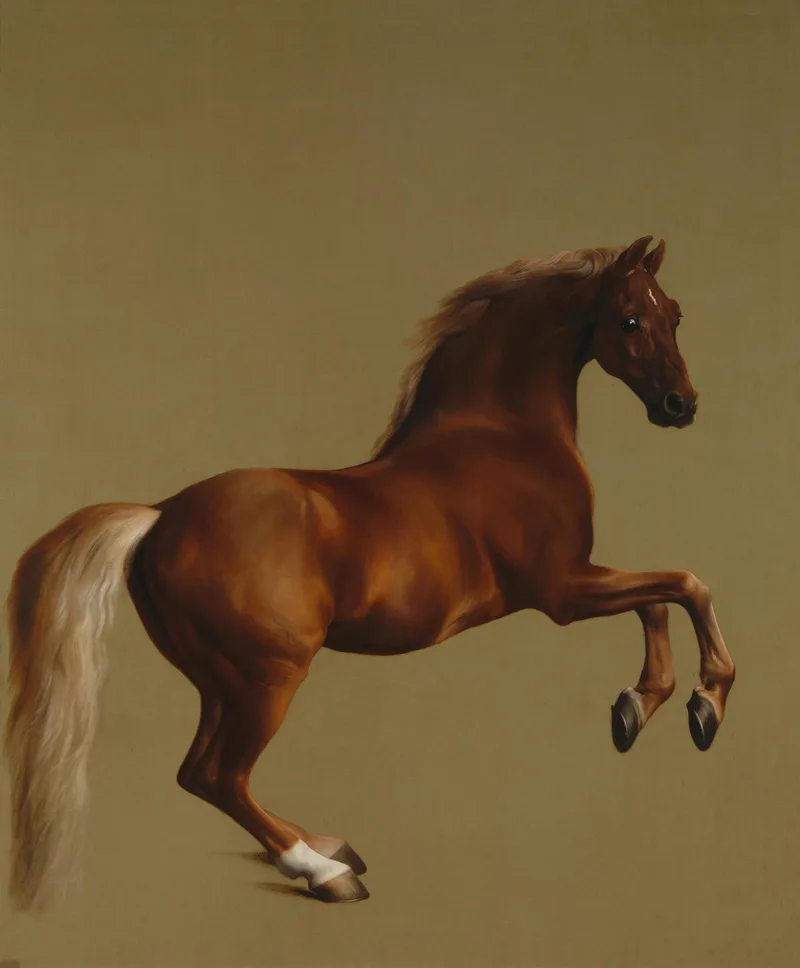
A horse can be the subject of a portrait in its own right. George Stubbs’s Whistlejacket makes that distinction especially clear: the animal occupies a monumental canvas without a rider, tack or an identified landscape. [1]
An individual animal, not a generic horse
The National Gallery dates Whistlejacket to about 1762 and identifies the animal as a chestnut Arabian stallion owned by the second Marquess of Rockingham. Its record is NG6569. The painting’s identity rests on that documentation, not on an attempt to infer a breed from a photograph. [1]
The museum records an oil painting measuring 296.1 by 248 centimetres. At that scale, the absence of a rider is consequential: the horse itself receives the sustained attention and imposing presentation often associated with a prominent human sitter. [1]
What an anatomical publication can establish
The Metropolitan Museum of Art holds an edition of The Anatomy of the Horse, written and illustrated by Stubbs and published in 1766. The book concerns the structures of the animal’s body, including bones and muscles. It documents anatomical study as a distinct part of his work. [2]
An anatomical book and a finished portrait answer different questions. One presents structures for study; the other establishes an individual subject within a composition. Knowing that an artist studied anatomy does not mean that every painted pose should be read as a mechanically exact sequence of movement.


Observation and pictorial choice
The National Gallery’s discussion of Whistlejacket notes adjustments to the pose that allow the viewer to see parts of the body simultaneously. It also rejects the claim that there is evidence for an originally intended rider. These points caution against reading the plain background as automatic proof that the painting was abandoned unfinished. [1]
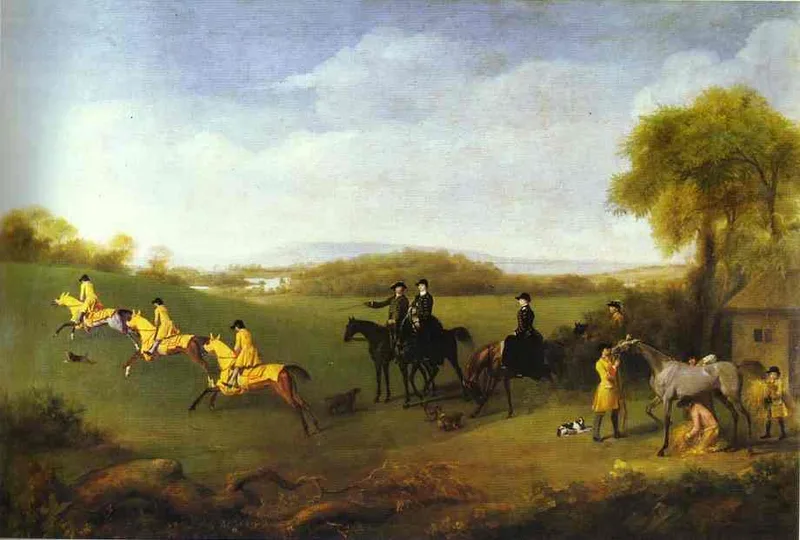
When comparing another Stubbs horse, ask what the picture includes around the animal: a named rider, attendants, a racecourse, a landscape or little setting at all. Describe that relationship before deciding whether the picture principally presents an animal, a human sitter or a sporting event.
How to compare records reliably
Use a documented name only for the horse to which the institution attaches it. A chestnut coat in another picture does not establish another portrait of Whistlejacket. The same caution applies to breed, owner and race history: each claim needs evidence for the individual work.
The equestrian portrait section provides a useful contrast with a rider-centred image. It should not automatically absorb every painting that depicts a horse. Keeping those purposes distinct makes a comparison more informative than sorting all equine pictures into a single portrait category.
| Object | Date in the record | Medium | Measurements | Institution and record |
|---|---|---|---|---|
| Whistlejacket | about 1762 | Oil painting | 296.1 × 248 cm | The National Gallery, London — NG6569 |
| The Anatomy of the Horse | published 1766 | Illustrated book, written and illustrated by Stubbs | — | The Metropolitan Museum of Art — collection record 359031 |
Dates, media and record numbers as published by each institution. [1][2] The measurement for Whistlejacket is the National Gallery's, 296.1 by 248 centimetres; our own catalogue entry gives 325 × 259 cm, and the museum figure is the one used here. [1] The Met record cited does not state page measurements for the book, so the cell is left empty rather than filled from elsewhere. [2]