
The Horse at Work
Horses at Rest: Stable, Mares and Foals
Mares, foals, stallions and grooms at the water trough: the horse observed at rest, with no rider to share the frame.
27 horse paintings, dated 1654–1903. Painters with the most works here: George Stubbs (4), Filippo Palizzi (3) and Gustave Caillebotte (3).
Browse the catalogue
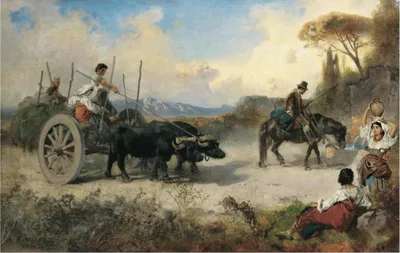 The watering placeAnton RomakoFrom$350
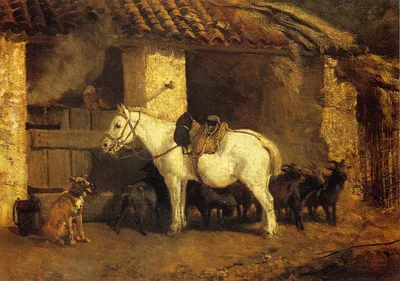 Outside the StableConstant TroyonFrom$350
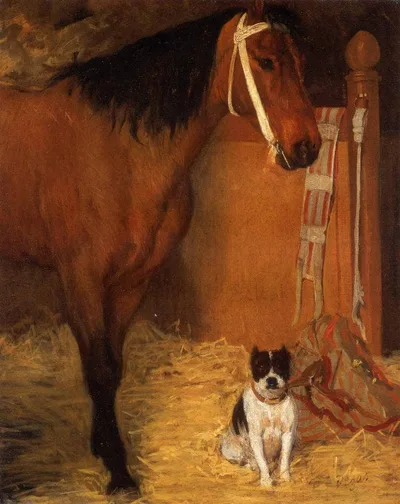 At the Stables, Horse and DogEdgar DegasFrom$350
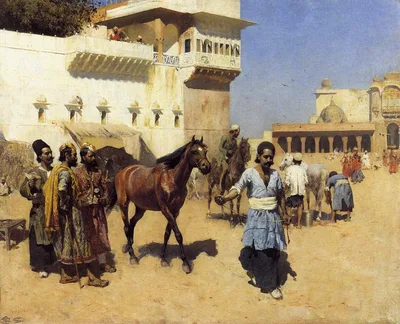 Horse Market, Persian Stables, BombayEdwin Lord WeeksFrom$350
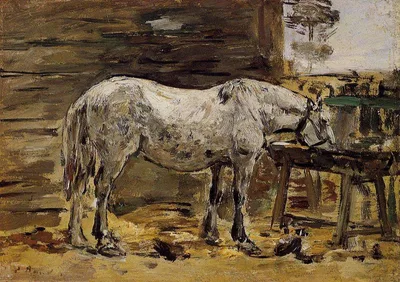 A Horse DrinkingEugene BoudinFrom$350
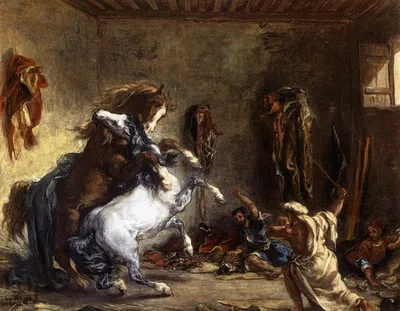 Arab Horses Fighting in a StableEugene DelacroixFrom$350
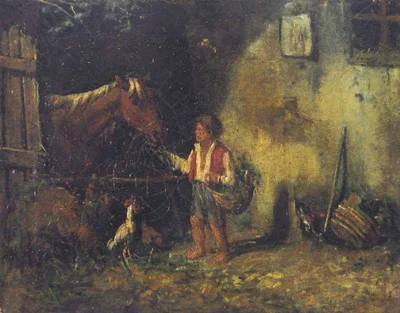 Stable interiorFilippo PalizziFrom$350
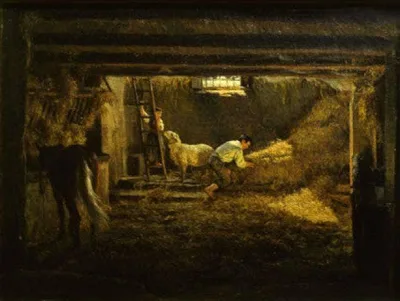 Interior of a stable, foreshortened horse and figures - Sun reflectionsFilippo PalizziFrom$350
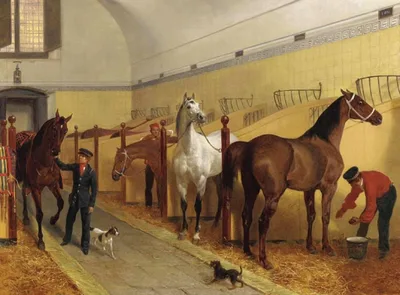 The stableFilippo PalizziFrom$350
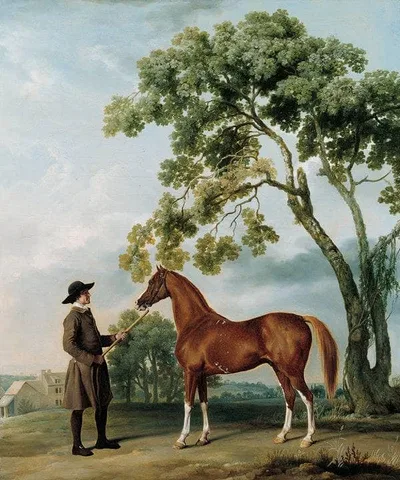 Lord Grosvenor’s Arabian Stallion with a GroomGeorge StubbsFrom$350
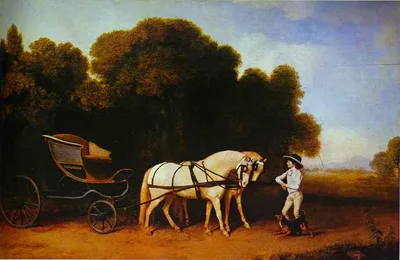 Park Phaeton with a Pair of Cream Pontes in Charge of a Stable Lad with a DogGeorge StubbsFrom$350
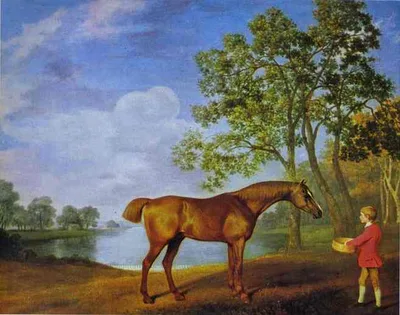 Pumpkin with a Stable LadGeorge StubbsFrom$350
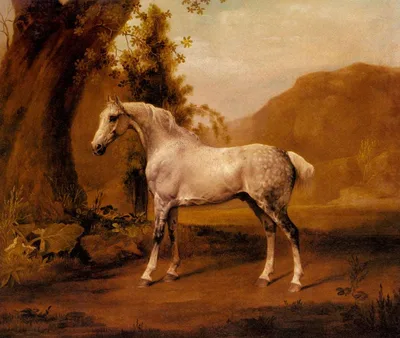 A Grey Stallion In A LandscapeGeorge StubbsFrom$350
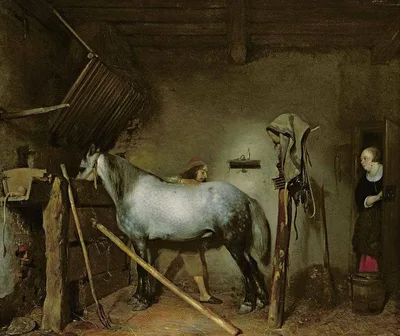 Horse in a StableGerard TerborchFrom$350
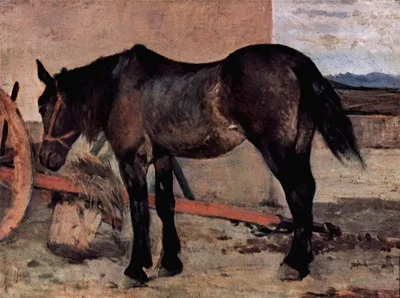 Mare at a cartGiovanni FattoriFrom$350
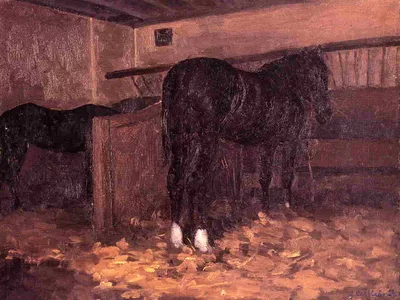 Horses in the StableGustave CaillebotteFrom$350
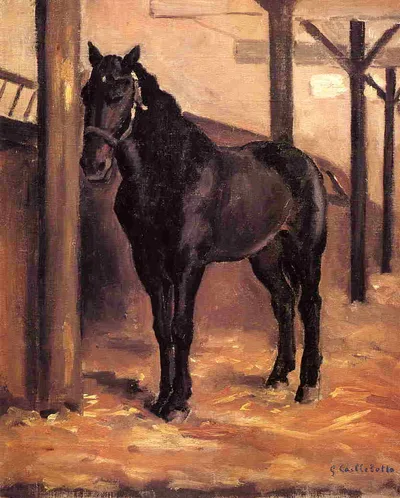 Yerres, Dark Bay Horse in the StableGustave CaillebotteFrom$350
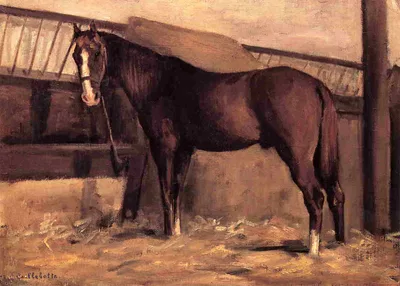 Yerres, Reddish Bay Horse in the StableGustave CaillebotteFrom$350
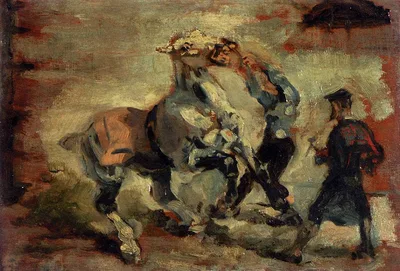 Horse Fighting His GroomHenri de Toulouse-LautrecFrom$350
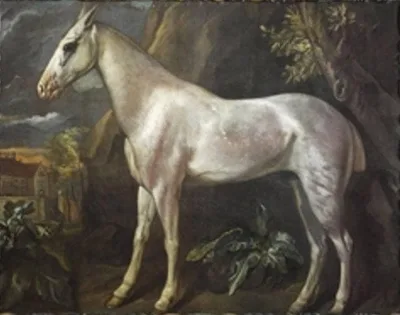 The Marquess of Worcester’s Dappled Grey Stallion, with Worcester House BeyondJacob Peter GowyFrom$350
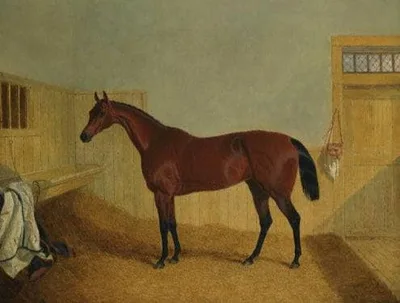 Mr. William Orde’s Bay Filly "beeswing" in a StableJohn Frederick Herring Sr.From$350
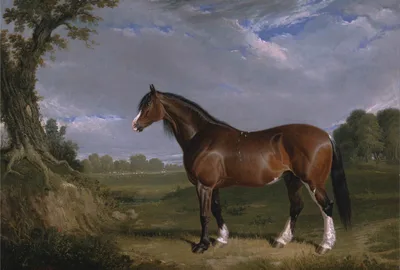 A Clydesdale StallionJohn Frederick Herring Sr.From$350
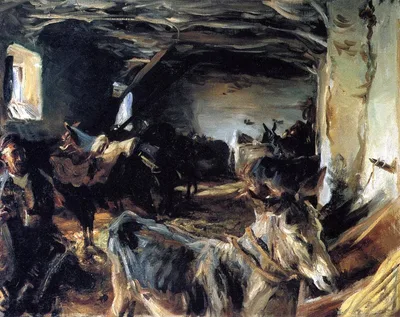 Stable at CuencaJohn Singer SargentFrom$350
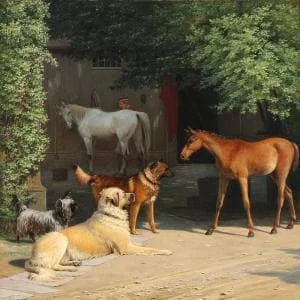 Morning At The Stable Door. While the colt is being dressed, the foal makes acquaintance.Jørgen SonneFrom$350
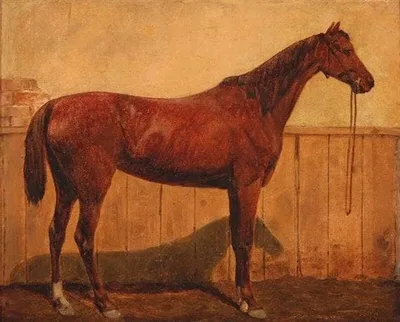 A horse in a stableJørgen SonneFrom$350
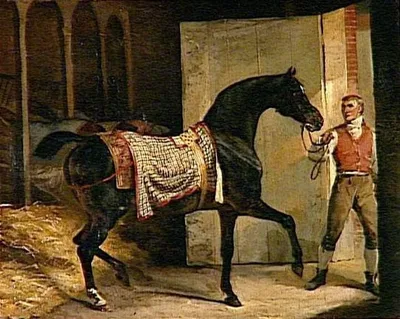 Horse leaving a StableThéodore GéricaultFrom$350
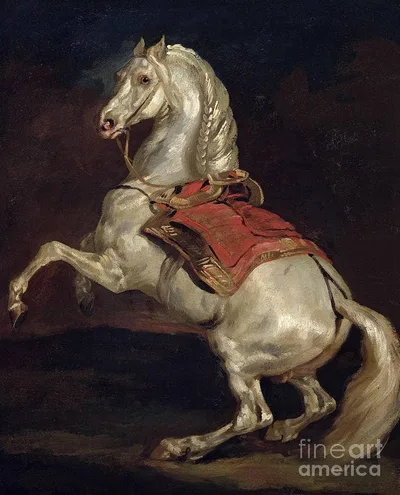 Napoleon’s Stallion, TamerlanThéodore GéricaultFrom$350
The stable, the study and the anatomical drawing are where the horse stops being a symbol. Stubbs dissected one over eighteen months to make his engravings; Degas modelled them in wax to understand the gait. What survives from this part of the tradition is quieter than the battle pieces and far more useful — it is artists learning the animal rather than deploying it.