Hand-painted in oil
About this Artwork
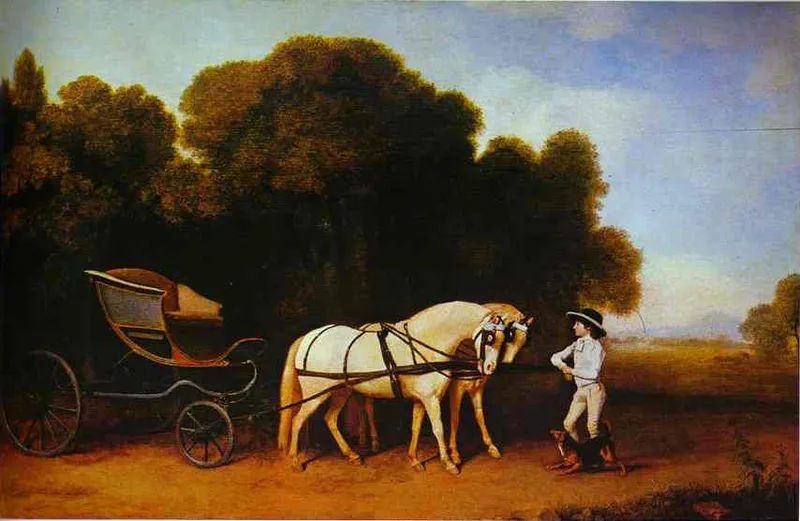
A vehicle named, and the pair that pulls it
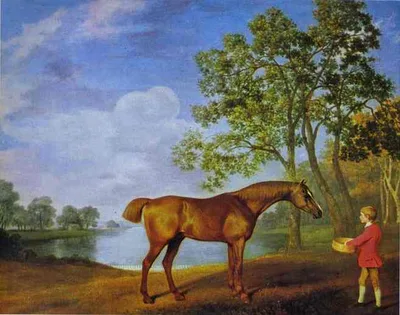
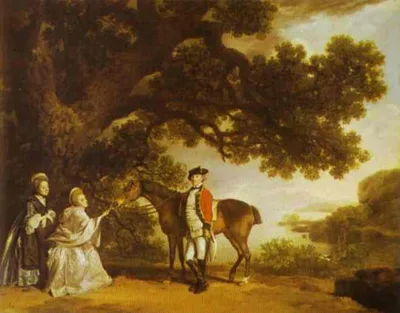
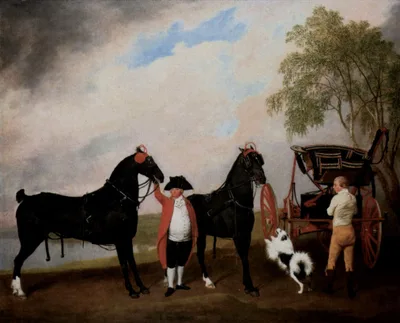
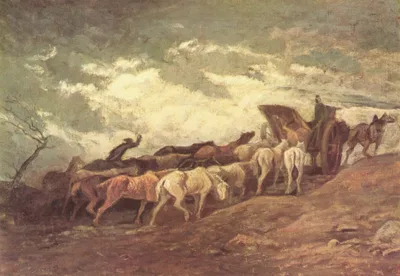
The title names the carriage first. A phaeton was a light open vehicle driven by its owner rather than by a coachman, and naming it fixes the animals' job precisely: they are a driven pair, not saddle horses. A pair works differently from a single animal. It is matched in size and stride, harnessed to a shared load, and controlled from the vehicle rather than from the animal's back.
What the record holds
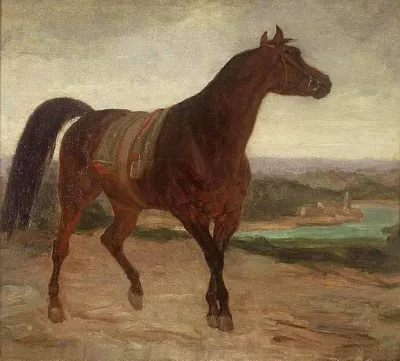
The date of creation is 1785 and the location is the Yale Centre For British Art (Yale University), in New Haven. The dimensions are not recorded. Romanticism is the recorded style, British the recorded nationality, and the measured colour family of the image is brown. A rural landscape heading accompanies Animal Art > Horse.
The title as the catalogue holds it
The word for the animals is printed Pontes in this record, and it is carried here unaltered, as every title is. 4 records in this catalogue name a phaeton, 3 of them by this painter, which makes the vehicle one of the more precisely specified functions in the whole collection.
Sources
3 references- Stubbs, George Townley — Getty ULAN
English engraver, 1756-1815
- George Stubbs — Wikipedia
George Stubbs (25 August 1724 – 10 July 1806) was an English painter, best known for his paintings of horses. Self-trained, Stubbs learnt his skills independently from other great artists of the 18th century such as Joshua Reynolds and Thom
- Stubbs, George — Getty ULAN
English painter, 1724-1806