Hand-painted in oil
About this Artwork
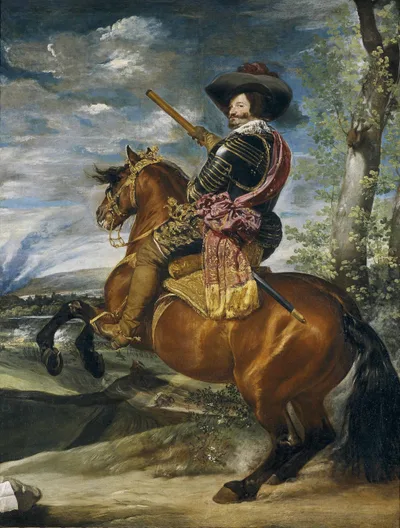
The same named sitter, mounted twice, seventy-two years apart
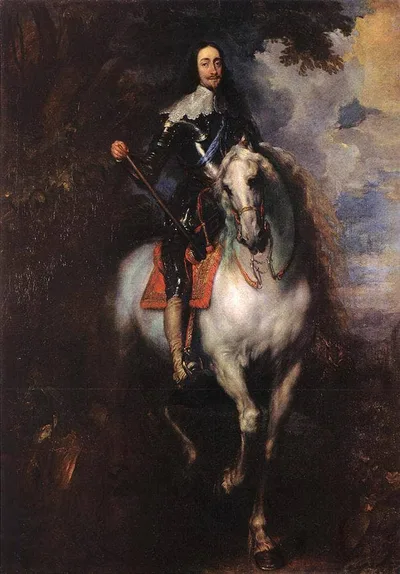
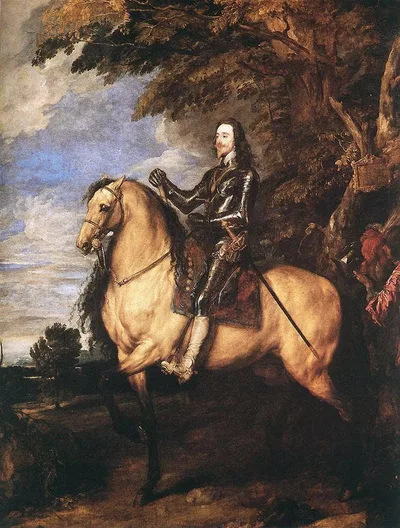
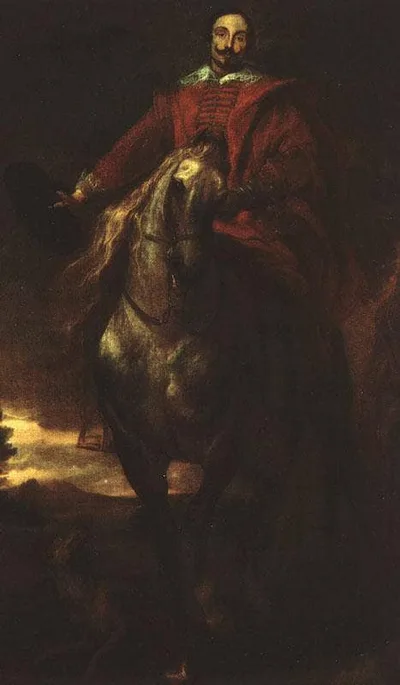
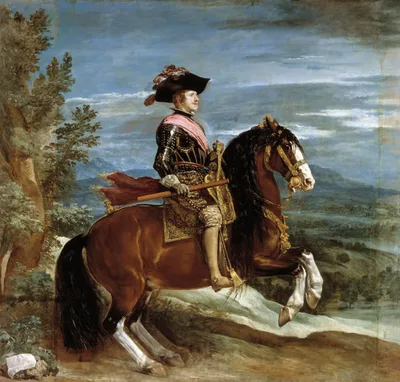
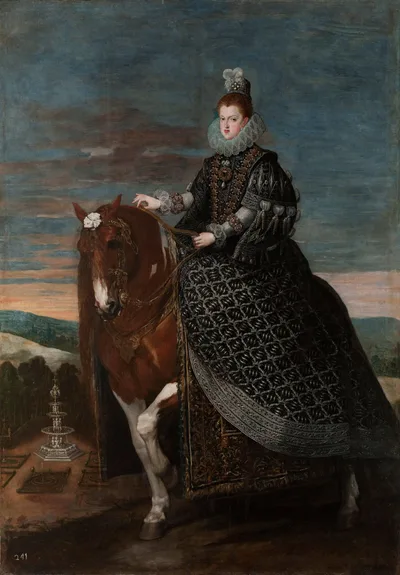
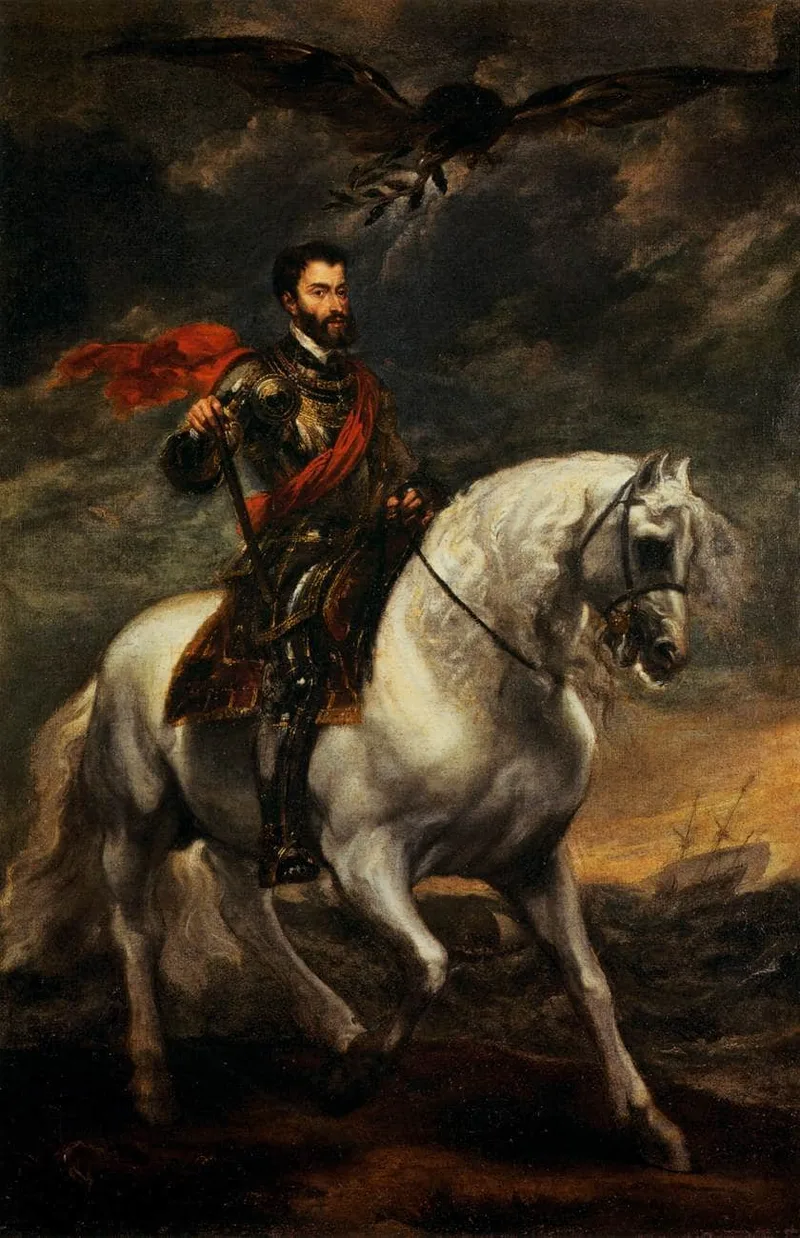
This register holds two works whose titles name Charles V. One is dated 1548 and recorded at the Museo del Prado, where the title names a battle; this one is dated 1620, is recorded at the Uffizi, and says in its own title that the sitter is on horseback. The distance between those two entries is the useful fact, because it shows what an equestrian portrait actually is. It is a format rather than an occasion. Once a sitter has been established inside it, the arrangement can be repeated by other hands long after any event that first justified it, and the animal keeps doing the same job in every repetition: it raises the man, carries what he does not carry, and is shown governed.
What the record holds
The date of creation is 1620 and the location is the Uffizi Gallery in Florence. The dimensions are given as 123 x 191 cm, and the record does not state which of the two figures is the height — a limit worth naming, since orientation is often the only clue this catalogue offers about whether a picture was sized for a hall or for a room. Baroque is the recorded style and Flemish the nationality attached to the painter. The work is filed under portraiture, male portraiture, Animal Art > Horse and a cultural heritage heading, and the measured colour family of the image is brown.
What the file does not contain
No commission, no sitting, no account of who wanted the picture or what it was for. Those are the first questions a state portrait raises, and this catalogue answers none of them.
Sources
1 references- Dyck, Anthony van — Getty ULAN
Flemish painter, 1599-1641, active in England