Hand-painted in oil
About this Artwork
The same formula, applied to a minister
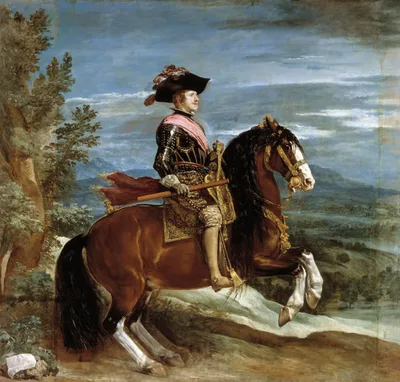
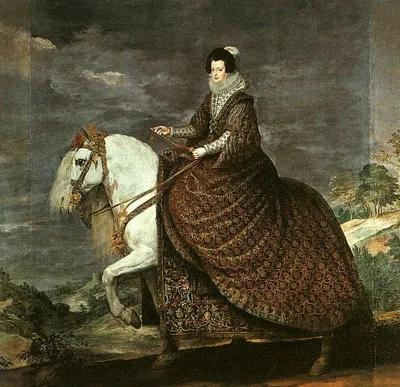
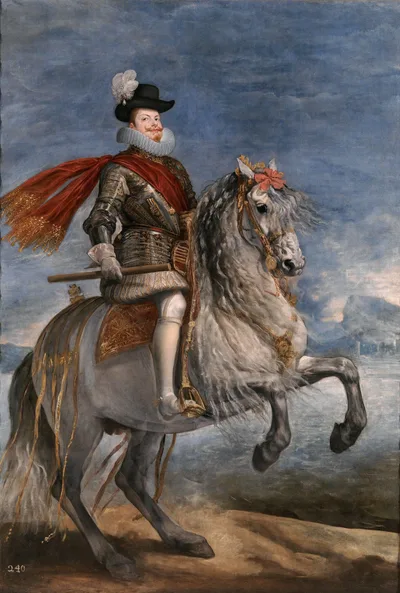
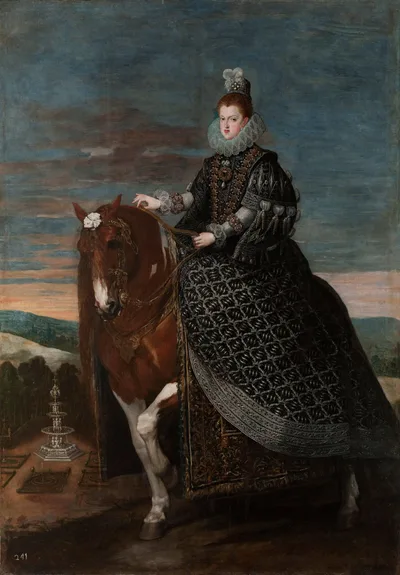
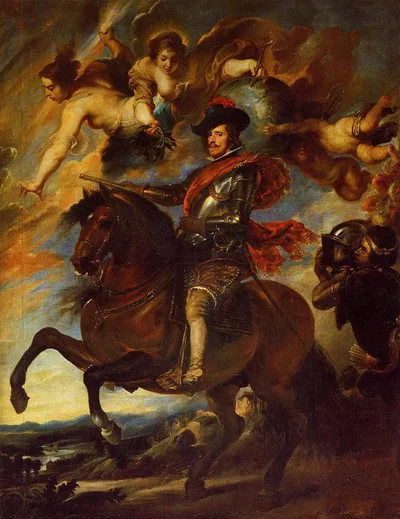
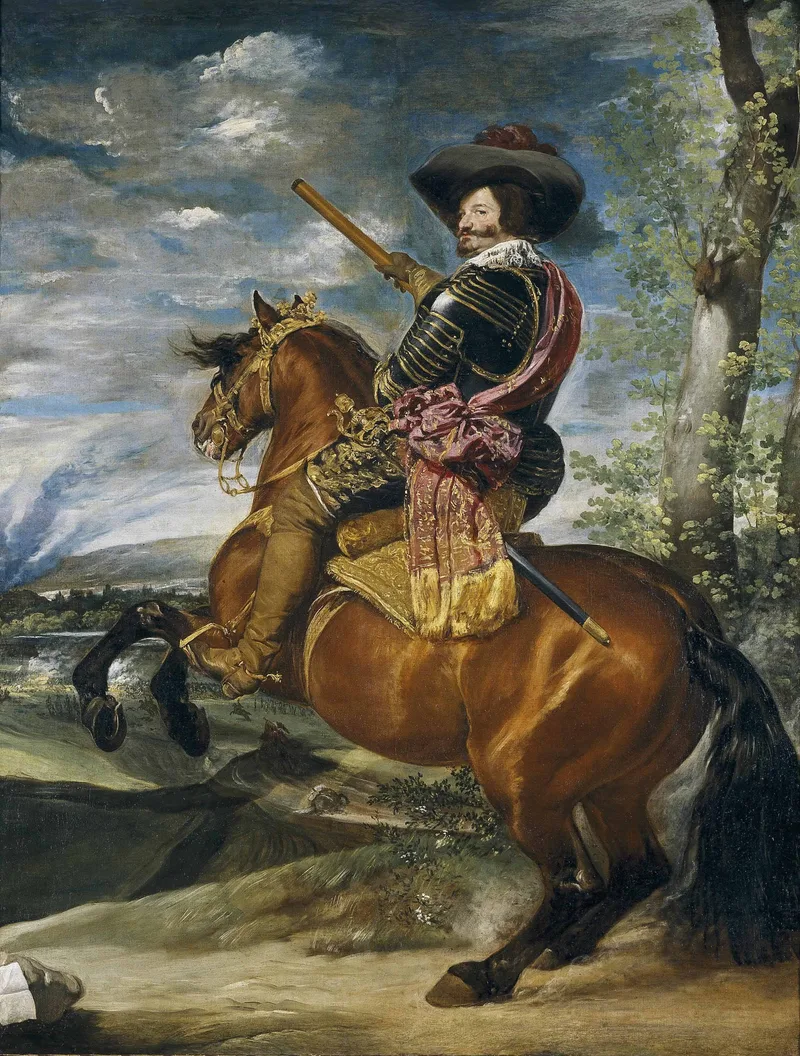
An equestrian portrait was not reserved for a monarch. It was available to anyone who could commission one and survive the comparison, and titled men used it as readily as crowned ones. This entry is of that second kind: the title names Don Gaspar de Guzman, Count-Duke of Olivares — a title of nobility, not a crown — and mounts him in the format a sovereign would use. The horse performs exactly the job it performs in a royal portrait, which is to raise the sitter and to be visibly under control while doing it.
What the record holds
The date of creation is given as 1634, one year before the Philip IV equestrian portrait held in the same collection, and the location is the Museo del Prado in Madrid. The dimensions are 239 x 313 cm. The record files the work under male portraiture, under Animal Art > Horse and under a mythology heading, with Baroque as the style, Spanish as the nationality, and brown as the measured colour family.
Reading a portrait of this class
Where a picture of this type is useful to a reader is in what it asserts rather than what it observes. It states a rank, a right to be shown mounted, and a claim to the kind of command that being carried by a large animal is meant to demonstrate. The catalogue records the claim; it does not test it.
Sources
3 references- Velázquez, Diego — Getty ULAN
Spanish painter, 1599-1660
- Diego Velázquez — Wikipedia
Diego Rodríguez de Silva y Velázquez (baptised 6 June 1599 – 6 August 1660) was a Spanish Baroque painter, the leading artist in the court of King Philip IV of Spain and Portugal, and of the Spanish Golden Age. He is generally considered on
- Gaspar de Guzmán, Count-Duke of Olivares — Wikipedia
Gaspar de Guzmán y Pimentel, 1st Duke of Sanlúcar, 3rd Count of Olivares, , known as the Count-Duke of Olivares (taken by joining both his countship and subsequent dukedom) (6 January 1587 – 22 July 1645), was a Spanish royal favourite (Spa