Hand-painted in oil
About this Artwork
The turf portrait, and what Up means
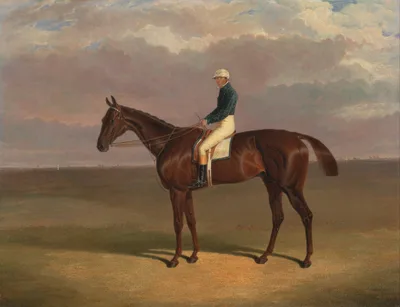
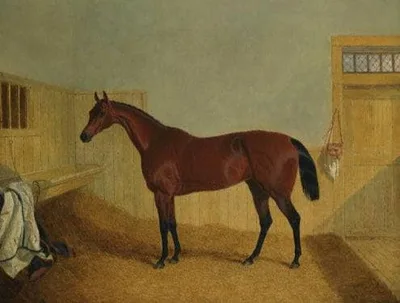
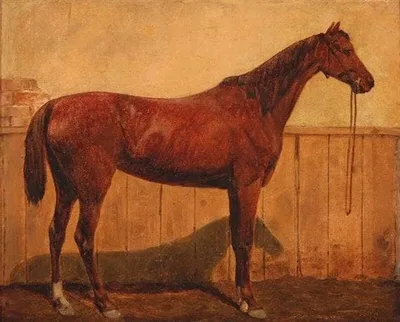
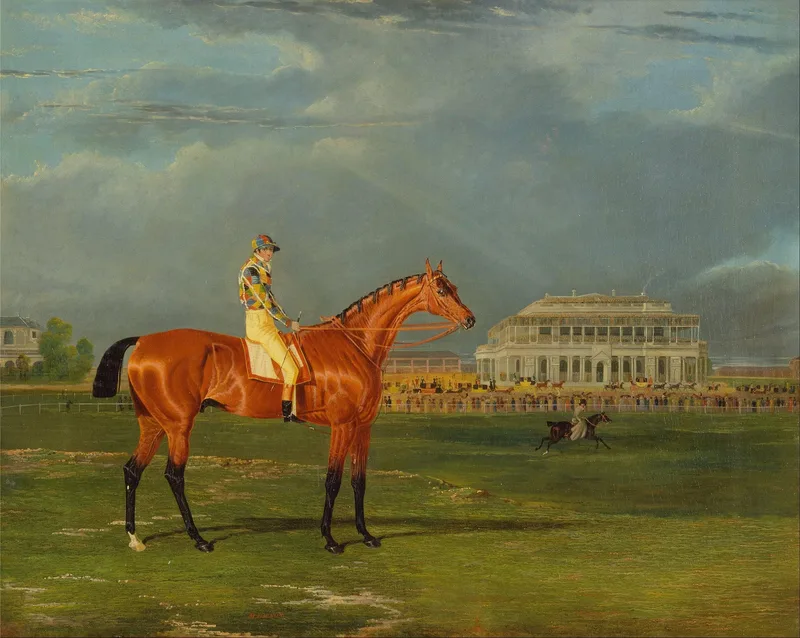
The title follows a formula used across nineteenth-century British racing pictures: the horse's name first, then the rider, then the word up. Up means mounted — the named jockey is in the saddle. That word order is the whole hierarchy of the genre. The animal is the sitter, the rider is an identifying detail attached to it, and the picture was made because the horse had a record worth recording. Here the animal is Memnon and the rider is William Scott.
What the record holds
The catalogue gives 1825 as the date of creation and the Yale Centre for British Art in New Haven, Connecticut, as the location. No dimensions are recorded. Romanticism is the style term and British the nationality attached to the painter. Landscape and field categories accompany Animal Art > Horse, and the measured colour families of the image are yellow and green.
What a picture like this was for
Pictures of this class worked as records of property. A winner was painted the way a family was painted, and the result is evidence about what was valued rather than about how any animal was built. This entry makes no claim about the animal's type or breeding, which a catalogue record cannot support.
Sources
4 references- Herring, John Frederick, Sr. — Getty ULAN
English painter, 1795-1865
- John Frederick Herring Sr. — Wikipedia
John Frederick Herring Sr. (12 September 1795 – 23 September 1865), also known as John Frederick Herring I, was a painter, sign maker and coachman in Victorian England. He painted the 1848 "Pharoah's Chariot Horses" (archaic spelling "Pharo
- Memnon, with William Scott Up — Wikidata
description: painting by John Frederick Herring; inception: 1825-01-01; dimensions: 67.5 × 84.5 cm; collection: Yale Center for British Art
- John Frederick Herring - Memnon, with William Scott Up - Google Art Project — Wikimedia Commons
High-resolution image of the work, hosted on Wikimedia Commons.