Hand-painted in oil
About this Artwork
Named horse, named rider, same formula
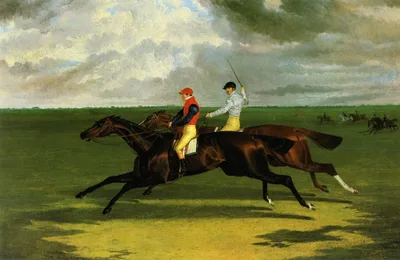
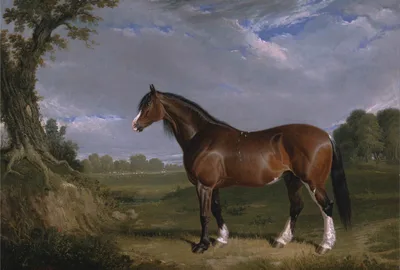
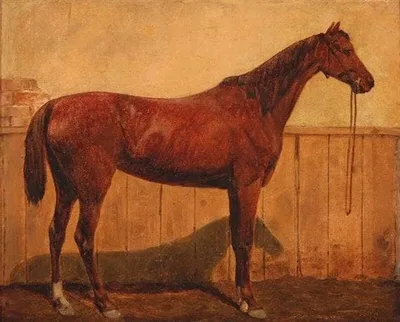
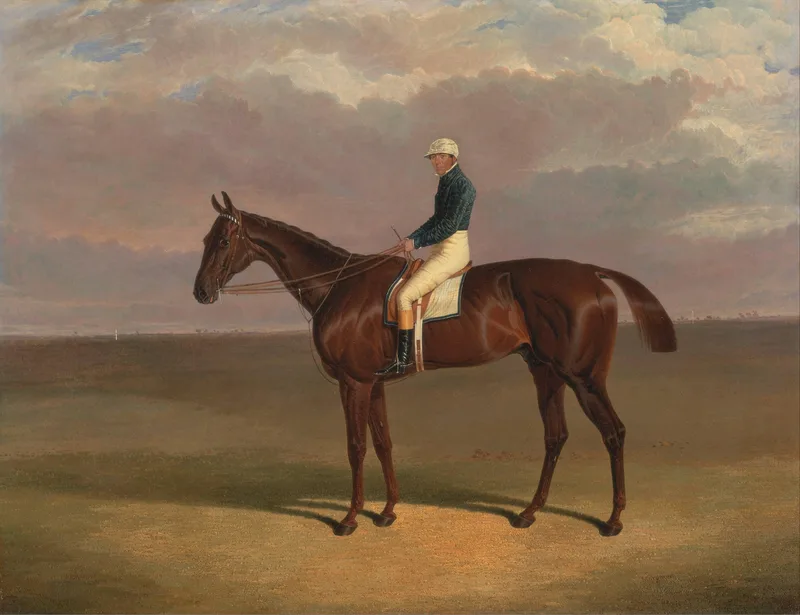
This entry uses the identical construction as its neighbour in the register: the horse Margrave, then the rider James Robinson, then up, meaning mounted. Two pictures eight years apart by the same painter, built to the same specification, is what a working practice looks like. Turf portraiture was a trade with a standard product, and the standardisation is not a fault in it — an owner ordering a picture knew exactly what would arrive.
What the record holds
The catalogue gives 1833 as the date of creation and the Yale Centre for British Art in New Haven, Connecticut, as the location. No dimensions are recorded for this work. Romanticism is the recorded style and British the nationality attached to the painter. The categories are Animal Art and Animal Art > Horse with no portrait heading attached, which is consistent with the genre: the human in the title is not the subject. The measured colour family of the image is ochre.
An identification problem specific to this field
British animal painting is full of families in which several generations share a surname, and entries are easy to misassign between father and son. This register reconciles artist identity against an authority file for that reason. The name on this entry is recorded as given in the source.
Sources
3 references- Herring, John Frederick, Sr. — Getty ULAN
English painter, 1795-1865
- John Frederick Herring Sr. — Wikipedia
John Frederick Herring Sr. (12 September 1795 – 23 September 1865), also known as John Frederick Herring I, was a painter, sign maker and coachman in Victorian England. He painted the 1848 "Pharoah's Chariot Horses" (archaic spelling "Pharo
- 'Margrave' with James Robinson Up — Wikidata
description: painting by John Frederick Herring; inception: 1833-01-01; dimensions: 66 × 96.5 cm; collection: Yale Center for British Art