Hand-painted in oil
About this Artwork
Where the horse would be, there is a man
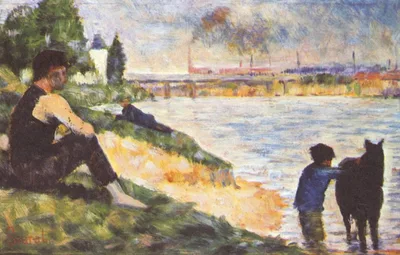
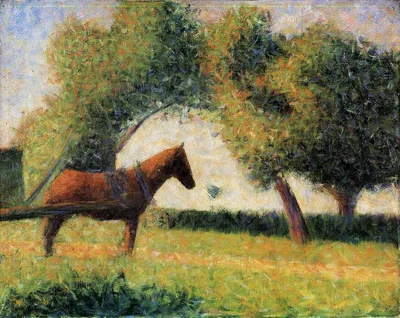
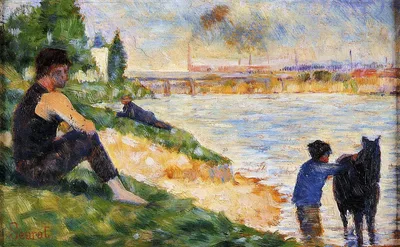
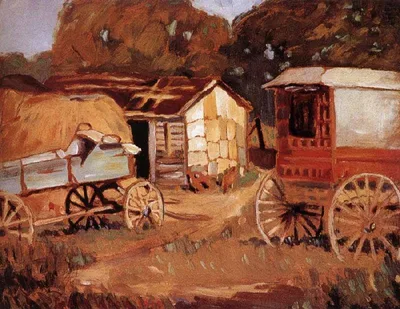
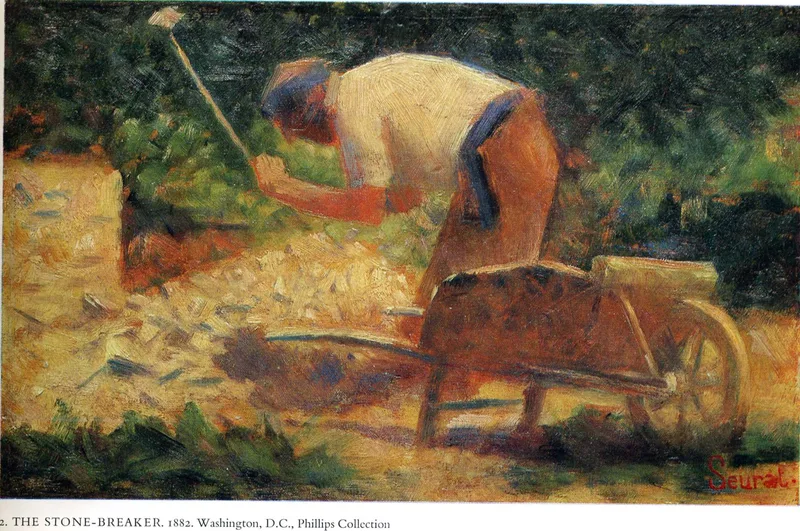
The title names a stone breaker and a wheelbarrow. Both halves matter. Breaking stone is the kind of heavy work that draught animals were kept for, and a wheelbarrow is a vehicle designed to be pushed by a person — the smallest and cheapest form of haulage there is, chosen when an animal is not available or not worth the cost. Read inside a register organised around what the horse does, a picture like this marks the boundary of that register: the point below which the animal is uneconomic and the work reverts to muscle.
What the record holds
The catalogue gives 1883 as the date of creation and the Philips Collection in Washington as the location, spelled that way in the record. No dimensions are recorded. Post-Impressionism is the style term and French the nationality attached to the painter. The record files the work under portraiture and male portraiture together with Animal Art > Horse, and the measured colour family of the image is ochre.
The animal heading, again
Five hundred and eighty-one of the six hundred and thirty-six works in this register carry Animal Art > Horse, and the tag is applied broadly enough that it appears on titles naming no animal at all. This is one of them. The entry states what the title supports and makes no claim that a horse is present.
Sources
2 references- Seurat, Georges — Getty ULAN
French painter and draftsman, 1859-1891
- Georges Seurat — Wikipedia
Georges Pierre Seurat (UK: SUR-ah, -ə, US: suu-RAH; French: [ʒɔʁʒ pjɛʁ sœʁa]; 2 December 1859 – 29 March 1891) was a French post-Impressionist artist. He devised the painting techniques known as chromoluminarism and pointillism and used co