Hand-painted in oil
About this Artwork
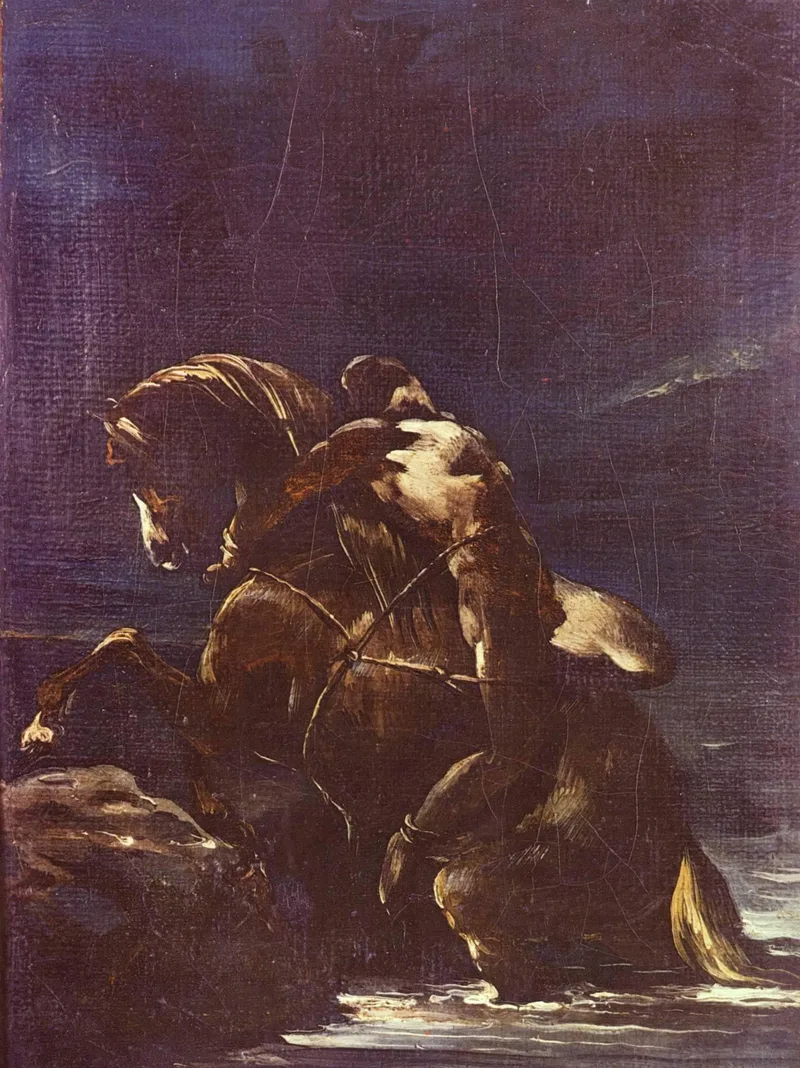
The equestrian portrait, inverted
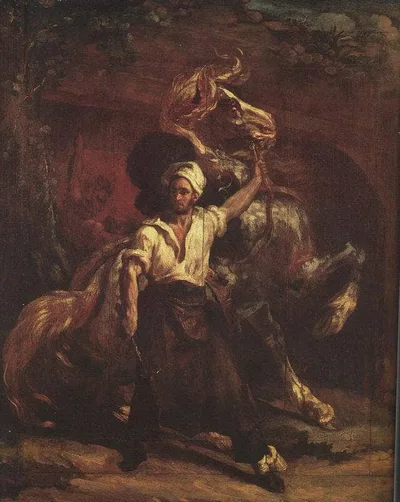
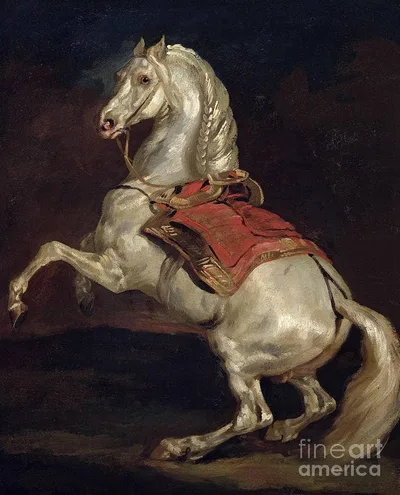
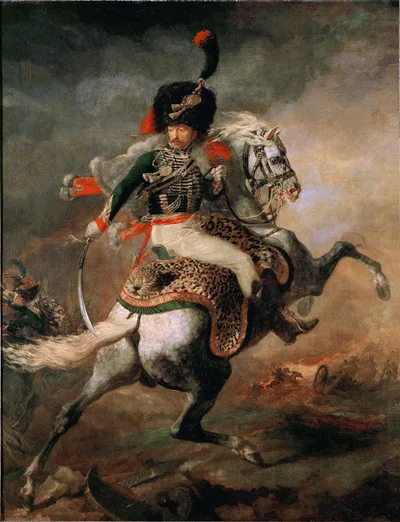
The Mazeppa subject is a punishment narrative: a man is bound to a horse and the animal is driven off with him still attached. Set against the court portraits at the head of this register, it is the same two parties in the same physical arrangement with every term reversed. There, the man commands and the animal carries him at his pleasure; here, the man is cargo and the animal's speed is the instrument acting on him. It is the sharpest illustration this catalogue offers of why the register sorts by function. The pose is nearly the same. The meaning is the opposite.
What the record holds
The catalogue gives 1820 as the date of creation and a private collection as the location. No dimensions are recorded; the field is empty and this entry leaves it empty. Romanticism is the style term and French the nationality attached to the painter. The record files the work under Animal Art and Animal Art > Horse and nothing else, and the measured colour families of the image are pink and red.
What is not being claimed
This entry names the narrative convention because it is public, stable and old. It makes no claim about which text the painter worked from, who commissioned the picture, or where it has been. The catalogue records none of those things.
Sources
2 references- Géricault, Théodore — Getty ULAN
French painter and draftsman, 1791-1824
- Théodore Géricault — Wikipedia
Jean-Louis André Théodore Géricault (French: [ʒɑ̃lwi ɑ̃dʁe teɔdɔʁ ʒeʁiko]; 26 September 1791 – 26 January 1824) was a French painter and lithographer. His best-known painting is The Raft of the Medusa. Despite his short life, he was one of